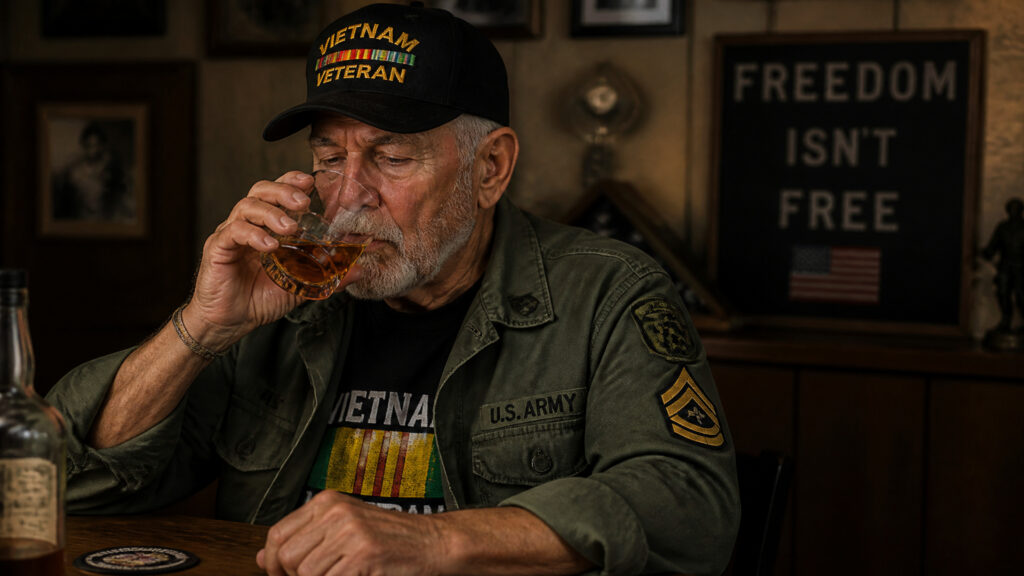
The line is not a number of drinks. Heavy drinking describes a pattern, how much and how often, while alcohol use disorder is a medical condition defined by loss of control, cravings, and drinking despite harm. A service member can drink heavily without a disorder, but signs like tolerance, blackouts, drinking to cope, and failed attempts to cut back mean the pattern has crossed into something worth checking. Here are the thresholds and the warning signs.
Military culture normalizes drinking, so “normal for my unit” is a poor measuring stick. The useful question is not whether you drink like the people around you, but whether the drinking is starting to run you.
This is not about judgment or labels. It is about knowing where the guidelines sit and which signs mean it is time to talk to someone, especially when a single alcohol-related incident can put a career at risk.
Key takeaways
- ✓Moderate drinking is up to 1 drink a day for women and 2 for men. Above that, risk climbs.
- ✓Binge drinking is about 4 drinks (women) or 5 (men) in roughly 2 hours.
- ✓Alcohol use disorder is a diagnosis, not a volume. It is about control and harm, not just amount.
- ✓Tolerance, blackouts, drinking to cope with stress or PTSD, and failed cut-downs are key warning signs.
- ✓Both TRICARE and the VA cover screening and treatment, and screening is confidential.
How much drinking counts as moderate?
Everything is measured in standard drinks. One standard drink is about 14 grams of pure alcohol, which is roughly a 12 oz regular beer, a 5 oz glass of wine, or a 1.5 oz shot of spirits.1
Moderate drinking is defined as 2 drinks or less per day for men and 1 drink or less per day for women.2 Health authorities now stress that when it comes to alcohol, less is better, and no amount is fully risk-free.1
What counts as binge and heavy drinking?
These are the patterns where risk rises sharply.
| Pattern | Definition |
|---|---|
| Moderate | Up to 1 drink a day (women), up to 2 a day (men) |
| Binge | About 4 drinks (women) or 5 (men) in roughly 2 hours |
| Heavy | 5+ on any day or 15+ a week (men); 4+ on any day or 8+ a week (women) |
| High-intensity | Two or more times the binge threshold in one sitting |
High-intensity drinking, sometimes called power drinking, matters for military settings where drinking to excess can be treated as a rite of passage.3 A pattern like this raises risk even in someone who does not have a disorder.
When does heavy drinking become alcohol use disorder?
This is the real line. Heavy or binge drinking describes behavior; alcohol use disorder is a diagnosable condition defined by impairment, loss of control, and distress, not by volume alone.4
Clinicians look at eleven criteria over the past year, including drinking more or longer than intended, failed efforts to cut down, cravings, tolerance, withdrawal, and continuing to drink despite problems it causes. Meeting 2 to 3 is mild, 4 to 5 is moderate, and 6 or more is severe.4 You do not need to hit rock bottom to qualify, and holding a job does not rule it out.
What are the warning signs the line has been crossed?
Watch for the signs that map to those criteria: rising tolerance (needing more for the same effect), blackouts or memory gaps, drinking to cope with stress, PTSD symptoms, or to fall asleep, repeated failed attempts to cut back, cravings, and withdrawal like shakes, sweats, or anxiety that eases when you drink.4
Add the military-specific ones: drinking before or around duty, and drinking that is starting to cause problems at work or at home. Drinking to quiet trauma symptoms is especially worth catching early, since PTSD and alcohol feed each other and are best treated together.8
Why does this matter more for a service member?
Because the stakes are higher and the culture hides the problem. In the 2018 Department of Defense health survey, 34 percent of active-component members reported binge drinking in the past month, and 6.2 percent reported serious consequences from drinking in the past year, including military punishment or arrest.6 Among veterans, about 9 percent meet criteria for alcohol use disorder, rising to roughly 21 percent for those under 50.7
A single alcohol-related incident, a DUI or a UCMJ action, can end a career that heavy drinking alone might never touch. That is why catching the warning signs early is worth more for a service member than for almost anyone else. If it has already reached that point, TRICARE covers treatment, spelled out in whether TRICARE covers alcohol rehab.
Can you check your own drinking?
Yes, with a quick, private self-check. The AUDIT-C is a three-question screen used widely in the VA; a score of 4 or more for men, or 3 or more for women, suggests drinking that is worth a closer look.5 The older CAGE questions (have you tried to Cut down, felt Annoyed by criticism, felt Guilty, or needed an Eye-opener) are another well-known quick gauge.
Neither is a diagnosis, only a clinician can make that, but a positive screen is a reasonable reason to talk to a provider. One safety note: if you have withdrawal symptoms, do not stop cold turkey without medical guidance, because alcohol withdrawal can be dangerous.
Our take
Measure against the guidelines, not your unit
The trap for service members and veterans is calibration. When everyone around you drinks hard, a real problem can look normal for years. The fix is to measure against the actual thresholds and the control-and-harm signs, not against the people at the bar.
Recoverion is independent and does not provide treatment or earn anything from referrals. We keep the tone plain because shame keeps people drinking, and a quiet self-check plus a confidential screen is a far better path than waiting for the incident that forces the issue.
Take the next step privately
A confidential screen and a quick coverage check can tell you where you stand before anything else.
- Check what your plan covers for screening and treatment.
- See how PTSD and drinking are treated together for veterans.
- Start at the Recoverion home page to find what fits your situation.
If you or someone you love is in crisis or thinking about self-harm, call the Veterans Crisis Line now: dial 988, then press 1. For a medical emergency, or dangerous withdrawal symptoms, call 911.
Questions people ask
How do I know if I am an alcoholic or if I just drink a lot?
Volume alone does not define it. It is the signs of losing control, cravings, failed cut-downs, and drinking despite harm that separate heavy drinking from alcohol use disorder.4
Is drinking every night a problem?
Nightly drinking is not automatically a disorder, but it raises risk and can signal reliance. How much, why, and whether you can stop matter more than the daily habit itself.
How much drinking is too much?
Above the moderate line of 1 drink a day for women and 2 for men, and especially the binge and heavy thresholds, is where health risk climbs.2
Am I drinking too much now that I am out of the military?
Many veterans keep a service-era drinking pace that stands out in civilian life. A quick AUDIT-C self-check can help you gauge it.5
Everyone in my unit drinks like this. Is it normal or a problem?
Military culture normalizes heavy drinking, so normal for your unit is not the same as low-risk. Measure against the guidelines, not your buddies.
I only drink on weekends but I black out. Is that bad?
Blackouts mean your blood alcohol hit a dangerous level. Frequency aside, repeated blackouts are a clear warning sign.
I drink to fall asleep or to quiet the nightmares. Is that a red flag?
Yes. Drinking to cope with PTSD or sleep is a common self-medication pattern that backfires and is one of the strongest signs to get checked.8
I have tried to cut back and cannot stick to it. What does that mean?
Repeated failed attempts to cut down is one of the eleven diagnostic criteria. It is worth talking to a provider.4
Can you be a high-functioning drinker and still have a problem?
Yes. Holding a job does not rule out alcohol use disorder, which is about control and harm, not whether you are still functioning.
Will getting help for drinking hurt my career or clearance?
Confidential screening and TRICARE and VA treatment exist, and an alcohol-related incident like a DUI is the bigger career threat than seeking help.
Sources
- NIAAA, The Basics: Defining How Much Alcohol Is Too Much.
- CDC, About Moderate Alcohol Use.
- NIAAA, Understanding Alcohol Drinking Patterns.
- NIAAA, Alcohol Use Disorder: From Risk to Diagnosis to Recovery.
- VA, AUDIT-C Screening.
- RAND, 2018 DoD Health Related Behaviors Survey, Substance Use.
- RAND, Alcohol Use Disorder Among U.S. Veterans.
- VA National Center for PTSD, Substance Use and PTSD.
- TRICARE, Substance Use Disorder Treatment.
Recoverion is an independent educational resource, not a treatment provider, insurer, or government agency. This article is general information, not medical advice, and the self-checks mentioned are not diagnostic. Talk with a licensed provider, the VA, or your TRICARE plan for guidance, and seek medical help before stopping heavy drinking suddenly.