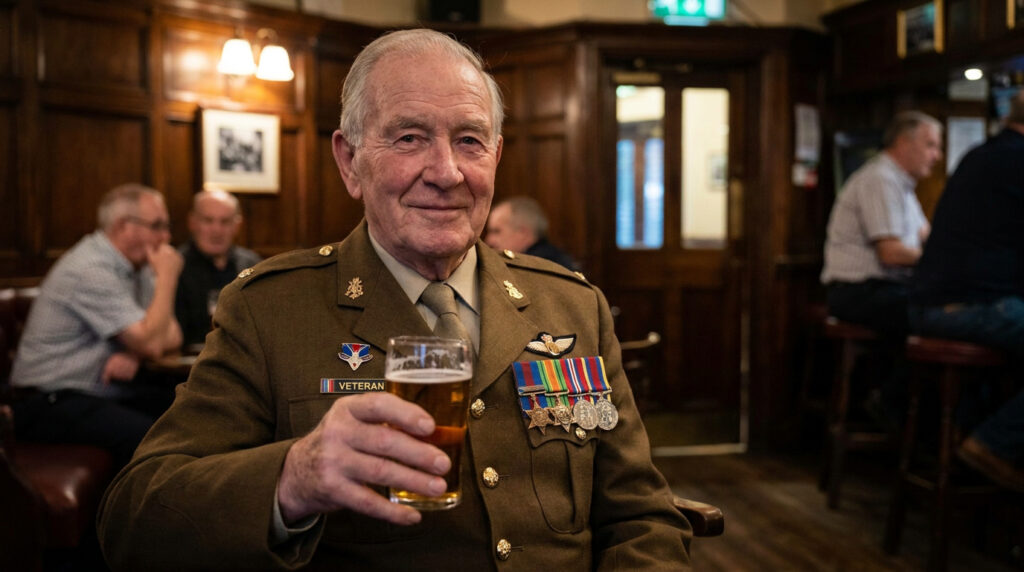
Yes. TRICARE covers alcohol rehab when it is medically necessary, across detox, inpatient and residential care, partial hospitalization, intensive outpatient, and standard outpatient counseling. It also covers medication that helps you stop drinking. Residential and other substance use treatment need pre-authorization first. Here is how each level works, what it costs, and where to start near San Antonio.
Alcohol is the substance most veterans and service members struggle with, by a wide margin. About one in fifteen veterans had a substance use disorder in the past year, and alcohol is the leading substance among them.1 So if you are reading this for yourself or someone you love, you are far from alone, and the coverage is real.
TRICARE treats alcohol use disorder the same way it treats any substance use disorder. If care is medically necessary and uses proven methods, it is covered.2 The question most people actually have is not whether rehab is covered, but which kind, what gets approved first, and what they will pay. That is what the rest of this guide walks through.

What TRICARE covers for alcohol rehab
TRICARE covers the full range of alcohol treatment settings when a provider finds them medically necessary. The official substance use disorder benefit lists each one.2
| Level of care | What it is, and pre-authorization |
|---|---|
| Detox (withdrawal management) | Medical management of alcohol withdrawal, which can be dangerous. Covered, and often the safe first step before further treatment. |
| Inpatient and residential | Round-the-clock care for severe cases. Covered. Residential treatment requires pre-authorization. |
| Partial hospitalization (PHP) | Day treatment, several hours most days. Covered. No pre-authorization needed. |
| Intensive outpatient (IOP) | Several sessions a week while you live at home. Covered. Check with your regional contractor on pre-authorization. |
| Standard outpatient | Individual, group, and family therapy. Covered as medically necessary. |
| Medication (MAT) | FDA-approved medication to reduce cravings and support sobriety. Covered through the pharmacy benefit. |
Two things are not covered: aversion therapy and any treatment that is not proven.2 Everything in the table above is standard, evidence-based care, which is why it sits inside the benefit. For the wider picture of how the benefit works, see our guide on whether TRICARE covers addiction treatment.

Detox usually comes first
For heavy or long-term drinking, stopping suddenly can be medically risky, and that is why detox is its own covered step. TRICARE covers the management of withdrawal symptoms while you get treatment.3 A medically supervised detox keeps you safe through the first days, when symptoms peak.
TRICARE is also clear that detox alone is rarely enough. The agency notes that detoxification safely manages the acute physical symptoms of withdrawal, but you should continue treatment afterward to actually stop drinking long term.4 So detox is the doorway, not the whole house. Our day-by-day medical detox timeline walks through what those first days look like.
Inpatient, PHP, and IOP, and how to choose
After detox, or instead of it for less severe cases, treatment steps down through levels of care. The right one depends on how severe the drinking is, whether you can stay safe at home, and what your life can accommodate.
Residential and inpatient
This is 24-hour care in a structured setting, used when alcohol use is severe or home is not a safe place to recover. TRICARE covers residential treatment, and it requires pre-authorization before you go.5
Partial hospitalization (PHP)
PHP is intensive day treatment, several hours a day, several days a week, while you sleep at home. TRICARE covers PHP for substance use disorder, and no pre-authorization is needed.6
Intensive outpatient (IOP)
IOP is the workhorse level for many people with alcohol problems. You attend several sessions a week and keep living at home and often working. TRICARE covers IOP for substance use disorder, with the program helping you stabilize, reduce symptoms, and prevent relapse.7 Whether it needs pre-authorization depends on your region, so check with your regional contractor. Our overview of the levels of care lays out how these fit together.
Medication that helps you stop drinking
Alcohol use disorder is one of the conditions where medication genuinely helps, and TRICARE covers it through the pharmacy benefit. Naltrexone, in both a daily pill and a monthly injection, reduces cravings and is the most commonly used option. It is the same medication used for opioids, which is why it also comes up in our guide on medication-assisted treatment and TRICARE.
On the VA side, the medication list is fuller. The VA offers acamprosate, disulfiram, naltrexone (oral and injectable), and topiramate for alcohol use disorder, paired with counseling.8 Medication is not a requirement, but for many people it makes the difference between white-knuckling sobriety and actually holding it.
The pre-authorization step, plainly
This is the part that trips people up, so here it is in one place. TRICARE’s mental health guidance states that substance use disorder treatment and residential treatment centers always require pre-authorization.9 Day programs are easier: PHP needs no pre-authorization, and IOP depends on your region.
If you are on TRICARE Prime, rehab generally starts with a referral from your primary care manager. On TRICARE Select, you have more freedom to choose a provider, but residential care still needs authorization. Your regional contractor handles the approval: Humana Military in the East Region, TriWest in the West Region, which includes Texas. A short call before you start can save you a denied claim later. See our walkthrough of how prior authorization works for the full process.
If you are active duty near JBSA
Active-duty members at Joint Base San Antonio have their own route. The Air Force runs the Alcohol and Drug Abuse Prevention and Treatment (ADAPT) program at Lackland and Randolph, and the Army runs the Army Substance Abuse Program (ASAP) at Fort Sam Houston. You can self-refer to ADAPT, and many members do exactly that before a problem grows.
The career worry is the real reason people hesitate, so it is worth being straight about it. Self-referral is generally the lower-risk path, and seeking help is treated very differently from a command-directed referral after an incident. We cover the specifics in our guide on whether rehab affects your military career and on confidential treatment near JBSA.
For veterans: the VA path
If you use the VA rather than TRICARE, alcohol treatment is fully covered. The VA offers medically managed detox, the medications listed above, and proven talk therapies including cognitive behavioral therapy, Motivational Enhancement Therapy, and Motivational Interviewing.8 To start, contact VA Mental Health and ask for the substance use disorder clinic for an assessment.
Locally, the Audie L. Murphy Memorial Veterans Hospital, part of the South Texas Veterans Health Care System, runs the VA substance use program, and the San Antonio Vet Center offers free counseling to combat veterans and their families.10 The Vet Center Call Center is 1-877-927-8387, around the clock. For more, see our guide to VA benefits for substance use treatment in San Antonio and our overview of addiction treatment for veterans in San Antonio.
What will it cost you?
Alcohol rehab is billed like any other covered service, so what you pay depends on your plan, whether the provider is in network, and your enrollment category. On Prime, in-network care routed through your PCM is low cost or no cost. On Select, you may have cost-shares and a deductible. There is no special surcharge for substance use treatment. Our guide to out-of-pocket costs for addiction treatment breaks the numbers down by plan.
Our take
Coverage is rarely the real obstacle
For alcohol, the benefit is broad. Detox, residential, PHP, IOP, outpatient counseling, and medication are all inside it. The two things worth doing before you start are confirming pre-authorization for residential care and checking whether your IOP needs it in your region. Get those right and claims tend to go smoothly.
The harder part is usually the decision to go, not the paperwork. Recoverion does not place anyone or earn anything from where you get care. The goal here is just to make the covered path clear so the cost question stops being the thing that holds you back.
See what your plan covers
A few minutes can show you what your alcohol treatment coverage looks like before you call a provider.
- Check what your plan covers with the coverage checker.
- Browse treatment centers in the San Antonio area.
- Visit the Recoverion home page for every guide in one place.
If you or a loved one is in crisis or thinking about self-harm, call the Veterans Crisis Line now: dial 988, then press 1. For a medical emergency, call 911.
Questions people ask
Does TRICARE cover alcohol rehab in full, or will I owe money?
It depends on your plan. On TRICARE Prime, in-network care routed through your primary care manager is low cost or no cost. On TRICARE Select, you may have a deductible and cost-shares. Alcohol treatment is covered as a medically necessary substance use disorder service, with no special surcharge.2
Do I have to notify my PCM before going to alcohol rehab?
On TRICARE Prime, rehab generally starts with a referral from your primary care manager, and substance use treatment needs pre-authorization. Checking in before you go helps make sure the facility is TRICARE-authorized and the care is approved, which protects you from a denied claim.9
Does TRICARE cover alcohol detox?
Yes. TRICARE covers the management of alcohol withdrawal symptoms while you get treatment. Because alcohol withdrawal can be dangerous, medically supervised detox is often the safe first step. TRICARE notes that detox alone is rarely enough, so you should continue treatment afterward.3
What is the difference between what Prime and Select cover for rehab?
Both cover alcohol rehab. Prime is lower cost but routes care through your primary care manager with referrals. Select gives you more freedom to pick a provider but can carry a deductible and cost-shares. Residential treatment requires pre-authorization under either plan.5
Will going to alcohol treatment hurt my military career or security clearance?
Seeking help, especially through self-referral, is generally treated very differently from a command-directed referral after an incident. A clearance is rarely revoked simply for getting treatment, and successfully addressing a problem is viewed as responsible. The specifics depend on your branch and situation, which we cover in our guide on whether rehab affects your military career.
Can active-duty service members self-refer for alcohol treatment?
Yes. At JBSA, the Air Force ADAPT program and the Army Substance Abuse Program both accept self-referrals, and many members use that route before a problem escalates. An intake assessment determines whether you meet criteria for an alcohol use disorder and what level of treatment fits.
Does the VA cover alcohol rehab, and how do I start?
Yes. The VA fully covers alcohol treatment, including detox, medication, and counseling. To start, contact VA Mental Health and ask for the substance use disorder clinic to set up an assessment. Combat veterans and their families can also use a Vet Center at no cost by calling 1-877-927-8387.8
Does TRICARE or the VA cover medication to help me stop drinking?
Yes. TRICARE covers FDA-approved medication for alcohol use disorder through the pharmacy benefit, with naltrexone, in pill and monthly injection form, the most common option. The VA covers a fuller list including acamprosate, disulfiram, naltrexone, and topiramate.8
Will getting alcohol treatment affect my VA disability rating?
Getting treatment does not, by itself, lower a VA disability rating. The VA rates conditions on their severity, not on whether you seek care. Many veterans find that documented treatment supports their record rather than harming it. We cover this in detail in our guide on whether treatment affects your VA disability rating.
Does TRICARE cover inpatient or outpatient alcohol rehab, and how do I choose?
Both are covered. Inpatient and residential care suit severe cases or when home is not safe for recovery, and need pre-authorization. Partial hospitalization and intensive outpatient let you live at home while getting intensive care. A provider assessment recommends the right level based on severity and your circumstances.2
Sources
- SAMHSA, 1 in 15 Veterans Had a Substance Use Disorder in the Past Year.
- TRICARE, Substance Use Disorder Treatment.
- TRICARE, Detoxification.
- TRICARE, Substance Use Disorders: Treatments.
- TRICARE, Residential Treatment Centers.
- TRICARE, Partial Hospitalization.
- TRICARE, Intensive Outpatient Program.
- VA, Substance Use Treatment Options.
- TRICARE, Mental Health and Substance Use Disorder Services (fact sheet).
- VA, South Texas Veterans Health Care System.
Recoverion is an independent educational resource, not a treatment provider, insurer, or government agency. This guide is general information, not medical, legal, or coverage advice, and it does not replace a decision from your plan or the VA. Confirm your benefits with TRICARE, your VA facility, or your provider before you act.