
If the fear of losing your rating is the reason you have put off getting help for PTSD or addiction, you are not alone, and the facts are reassuring. Getting treatment does not, by itself, lower your VA disability rating. The VA bases a rating on the severity of your condition, the evidence in your file, and a VA claim exam when one is needed, and a rating changes only through that formal process. Going to therapy or entering rehab is not part of it. Here is what actually affects a rating, what does not, and how to get care with confidence. If you have both VA and TRICARE, here is how to choose which one covers your treatment.
The short answer: care does not lower your VA disability rating
The VA decides a rating from the severity of your condition, the evidence in your file, and a VA claim exam if it determines you need one, as the VA explains on its disability ratings page. A rating moves through that process, not because you booked an appointment. Starting therapy, taking medication, or entering a rehab program is health care, and on its own it does not open or reopen your rating. For your own situation, a free VA-accredited Veterans Service Officer can confirm exactly what applies to you.
What can actually change a rating, and what cannot
A rating can change, but only through specific channels, and never as a punishment for asking for help.
- A scheduled VA reexamination can lead to a change if your condition has measurably improved or worsened. That is a decision about your health, based on evidence.
- Filing a claim, for an increase or for a new condition, puts your file in front of a rater again.
- Before the VA lowers a rating, it must propose the change in writing and give you a chance to respond, and you can challenge a VA decision through a decision review. Many long-standing ratings also carry added protection.
What does not change your rating: attending therapy, entering rehab, or using VA health care for PTSD or substance use. If anything, a steady treatment record can help later, because it documents your symptoms over time.
Why this fear is so common
For a lot of veterans the worry is simple: the help you need most could cost you the support you rely on. It is an understandable fear, and on communities like Reddit’s r/Veterans and r/VeteransBenefits it comes up constantly. On the specific question of seeking care, though, it is mostly unfounded.
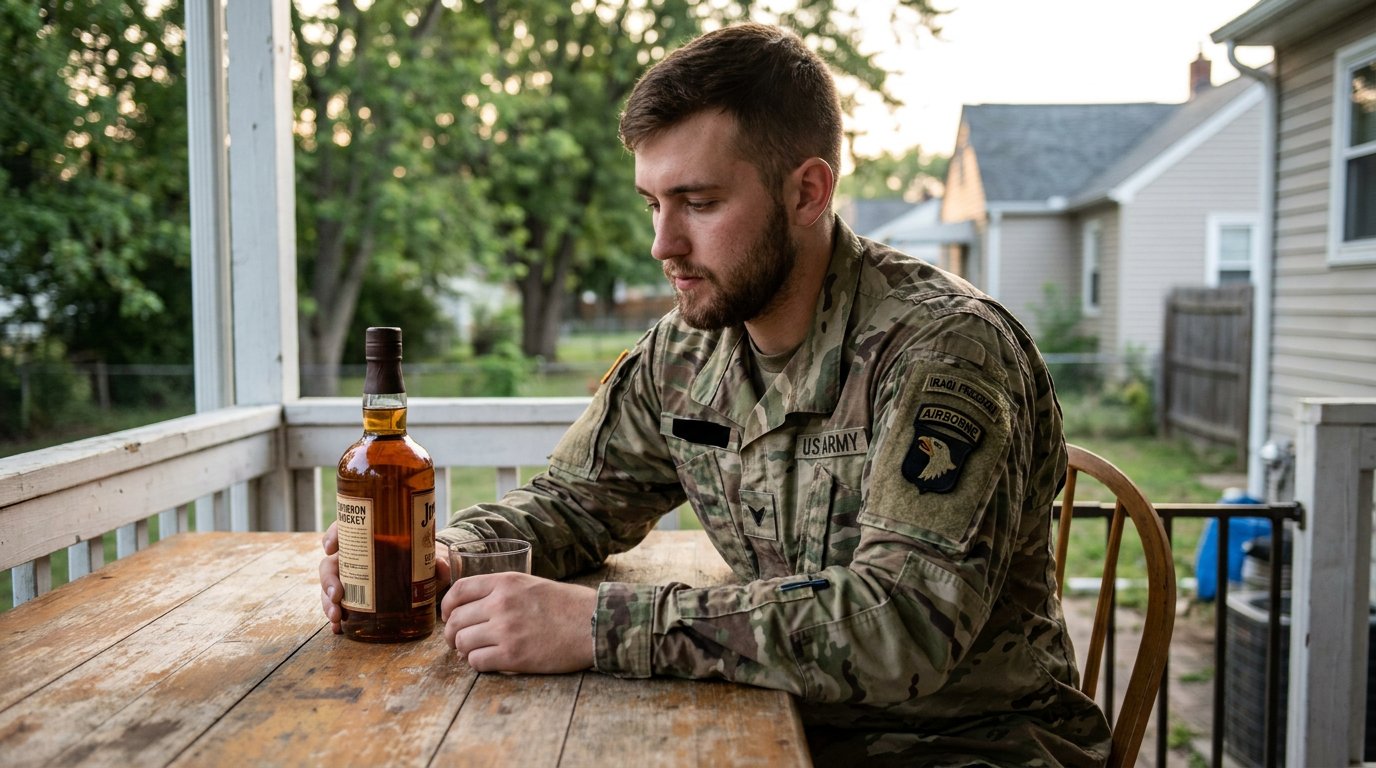
Treatment is effective, which is why this matters
The reason this is worth facing is that treatment works. In a published case of an Iraq War Marine treated for PTSD and heavy drinking at the same time, a structured program brought his trauma scores into the non-clinical range and sharply cut his drinking. In a case delivered entirely by video to an Army veteran who lived 90 miles from the nearest VA facility, PTSD symptoms fell by more than 80% and daily drinking dropped to almost none. If you want the fuller picture, we cover how PTSD and substance use are treated together in a separate guide.
Our take: do not let a rumor about your rating keep you from care
The belief that getting help will cost you your rating is, on the question of simply seeking care, a myth, and an expensive one. It keeps people drinking instead of healing and waiting instead of starting. Your rating reflects how you are actually doing, and it can only change through a documented VA process that includes written notice and the right to appeal. If that worry has held you back, the safer move is to get the care, keep your records, and bring any rating questions to a service officer. You are allowed to protect your benefits and your recovery at the same time.
Get help finding covered care near San Antonio
You do not have to sort this out alone. Finding covered care usually comes down to two things: knowing what your plan pays for, and seeing which programs near you fit. Both are simpler than they look.
Check what your TRICARE or VA plan coversExplore treatment options near San Antonio
New here? Start from the Recoverion homepage
If you or someone you love is in crisis right now, call the Veterans Crisis Line at 988 and press 1, or text 838255, any time. In an emergency, call 911.
Frequently asked questions
Will going to therapy through the VA affect my disability rating?
No. Attending therapy does not start a rating review. The VA decides a rating from your evidence and a claim exam when one is needed, and a rating changes only through that process, not because you used VA health care.
Does getting treatment lower my rating if I never file a claim?
Generally no. Without a new claim or a scheduled reexamination, your rating is not reopened simply because you went to appointments or entered rehab. Confirm your own situation with an accredited service officer.
Can the VA reduce a mental health rating?
Yes, but only through a defined process. A scheduled reexamination can lead to a proposed reduction if your condition has clearly improved. The VA must give you written notice first, and you can challenge it through a decision review. Many long-held ratings also carry protections.
Does the VA cover rehab at 100 percent?
The VA covers substance use and mental health treatment, including outpatient, intensive outpatient, and residential or inpatient care when needed, and many veterans pay little or nothing. What you pay depends on your eligibility and enrollment, so confirm with the VA.
Has anyone gone to inpatient rehab through the VA, and what is it like?
Yes, many veterans have. Programs vary, but they generally combine medical support, individual and group therapy, and planning for life after the program. Your VA team can explain what is available in your area.
What VA programs exist for mental health and substance use?
The VA offers a range, from outpatient therapy and medication for addiction treatment to intensive outpatient and residential programs, plus specialized PTSD care. Ask your VA provider or check the VA’s substance use pages.
Is addiction a VA disability?
A substance use disorder on its own is treated as a health condition. In some cases it can be linked to a service-connected condition such as PTSD, which is a claims question best reviewed with an accredited service officer.
Can therapy actually help my VA claim rather than hurt it?
It often helps. A consistent treatment record documents your symptoms over time, which can support a claim. Getting care and protecting a claim are not in conflict.
Can my VA disability be stopped for not following a VA treatment plan?
For most disability compensation, your benefits are not stopped for declining a particular treatment. Some specific programs have their own participation rules, so a service officer can confirm what applies to your benefits.
Do I have to be sober before I can start PTSD treatment?
Not necessarily. The evidence supports treating PTSD and substance use together, and trauma therapy can begin while you are still reducing your use. Your provider helps decide the right timing.
Does the VA treat PTSD and addiction at the same time?
Yes. The VA offers integrated, evidence-based care for co-occurring PTSD and substance use, often within the same program.
Can a routine reexamination lower my PTSD rating?
It can, if it finds your condition has improved enough to meet a lower rating. That is based on your symptoms and evidence, not on the fact that you sought treatment, and you can challenge a proposed reduction.
Are any ratings protected from being reduced?
Yes. Ratings that have been in place for a long period, and certain permanent ratings, carry added protections. The exact rules are specific, so confirm yours with an accredited service officer.
Will going to rehab affect my security clearance or military career?
For active-duty service members the rules differ from those for veterans, and seeking help is generally viewed differently from a disciplinary problem. Because specifics vary, confirm with an official source before assuming the worst.
Where can I get help right now if I am in crisis?
Call the Veterans Crisis Line at 988 and press 1, or text 838255, any time. If there is immediate danger, call 911.
This article is for general education and links to official sources where possible. It is not medical, legal, insurance, or VA benefits advice, and it does not replace guidance from a qualified professional. For decisions about a disability rating or a claim, speak with a VA-accredited Veterans Service Officer, and confirm coverage and treatment details with the VA, TRICARE, or your provider.